



Role:
Strategic Researcher, Trend Analyst, Design Philosopher
Timeline:
12 Weeks
Tools:
PESTLE Analysis, Mind Mapping, Primary Surveys, Competitor Trend Analysis.
At a Glance
The Challenge
For decades, UX design prioritised the "Attention Economy", maximising engagement at the cost of user well-being. This project began as a standard app-design initiative but pivoted after research revealed a global crisis of digital fatigue.
The Result: Rather than adding "more noise" with another app, I developed a Strategic Manifesto and React-based Web Experience designed to challenge product leaders to move from "Time-in-App" metrics to "Quality of Life" outcomes.
Research
Key Insights
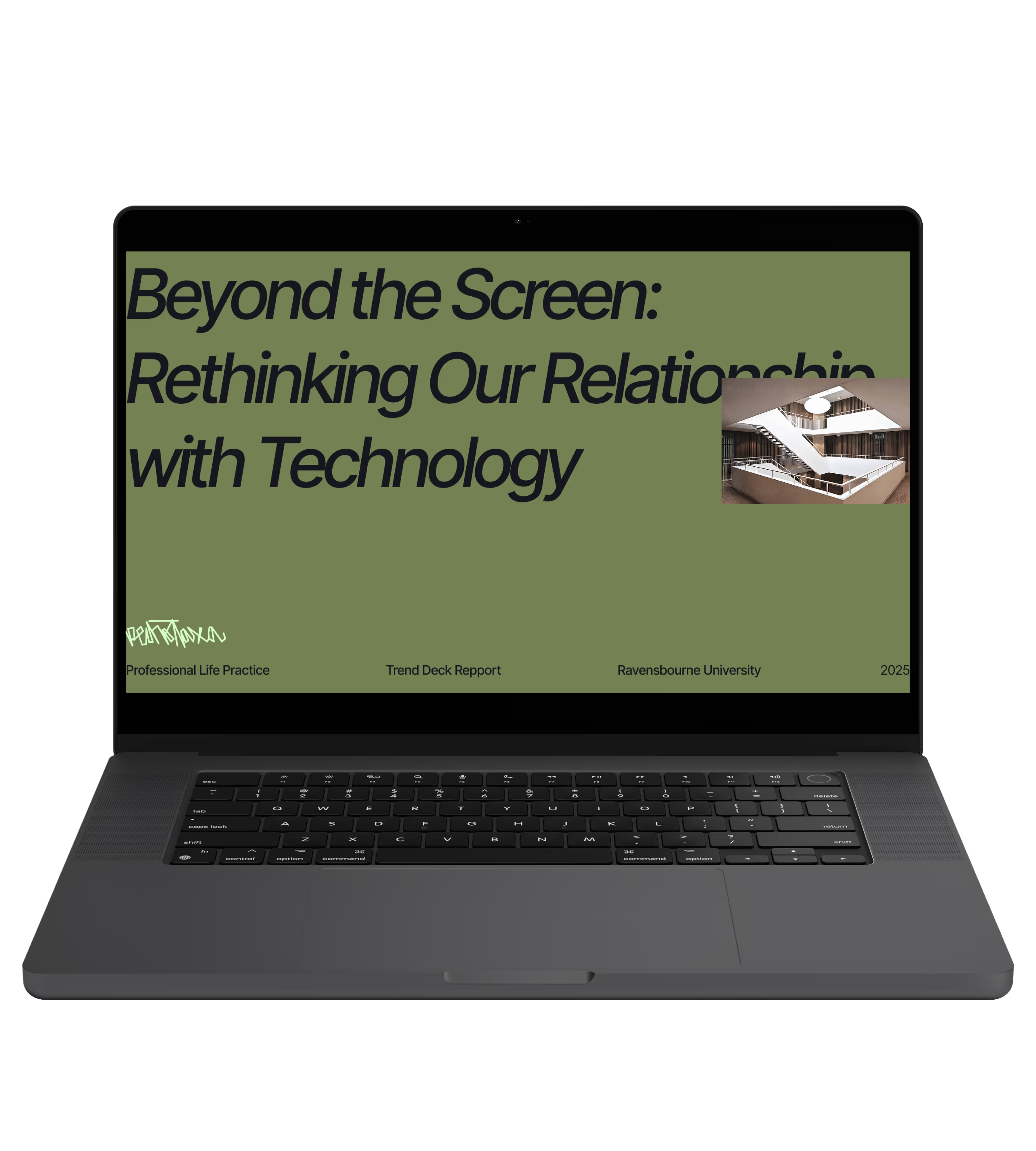
Conducted ad a 12-week strategic research project, this initiative moved beyond functional app design to address the root philosophical issue. Through PESTLE analysis and surveys, the research identified a massive cultural pivot toward Digital Minimalism, Intentional Tech, and Regulatory Reckoning.
.avif)
80% of survey participants
Feel overwhelmed by constant notifications and connectivity.
Push to Pull: Move from interruptive notifications to user-initiated engagement.
75% of survey participants
Prioritize mental well-being and focus as primary motivations for digital detoxing.
Outcome over Output: Define success by the quality of life enabled outside the screen.
The "Detox Paradox"
Users report initial anxiety when disconnecting, followed by "freedom" and "clarity".
Anxiety Mitigation: Design "exit ramps" and low-friction completion points to ease disconnection.
Trend Analysis
PESTLE & Market Trends
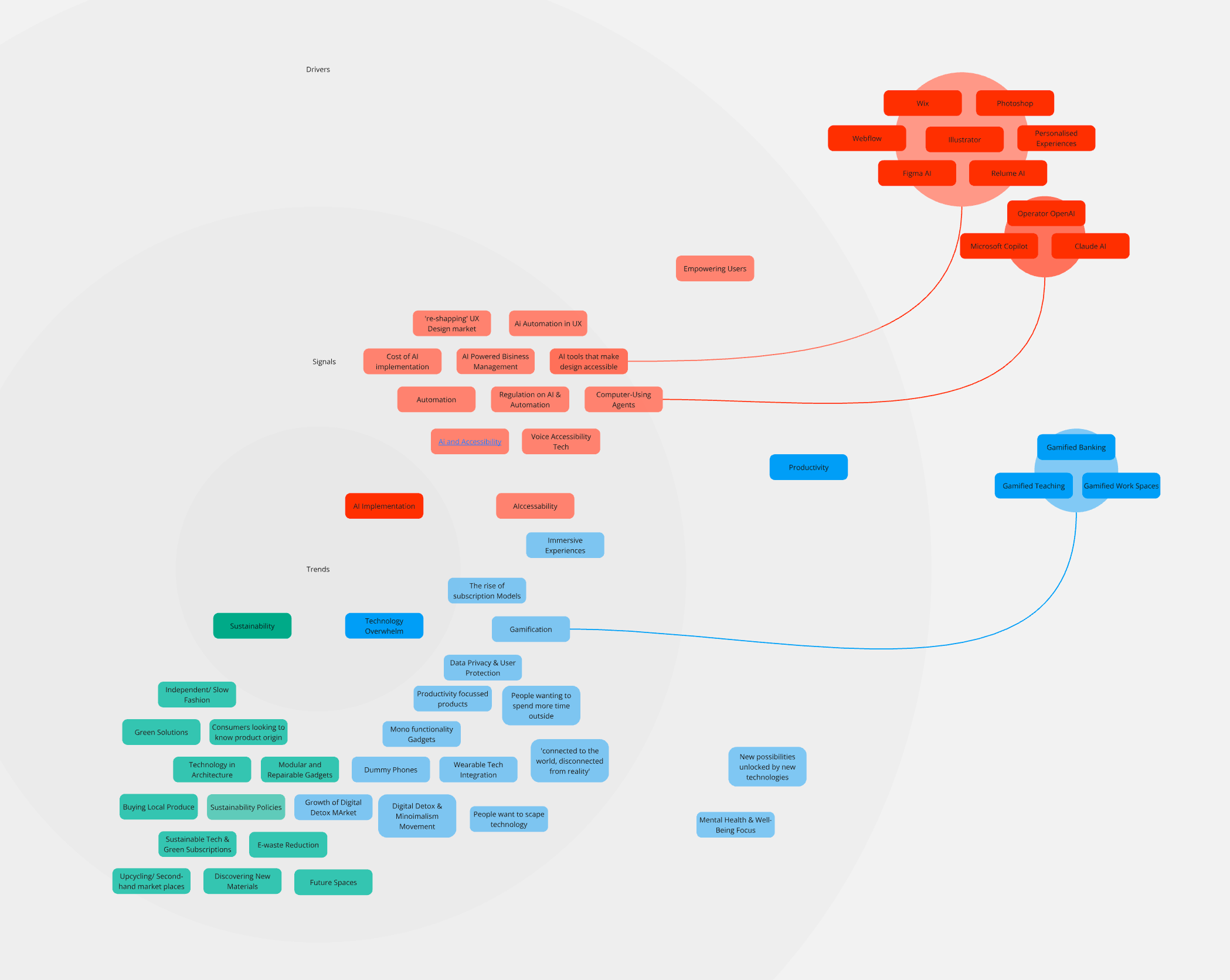
To understand the structural consequences of design failure, I conducted a PESTLE Analysis to identify design opportunities within the broader societal reckoning.
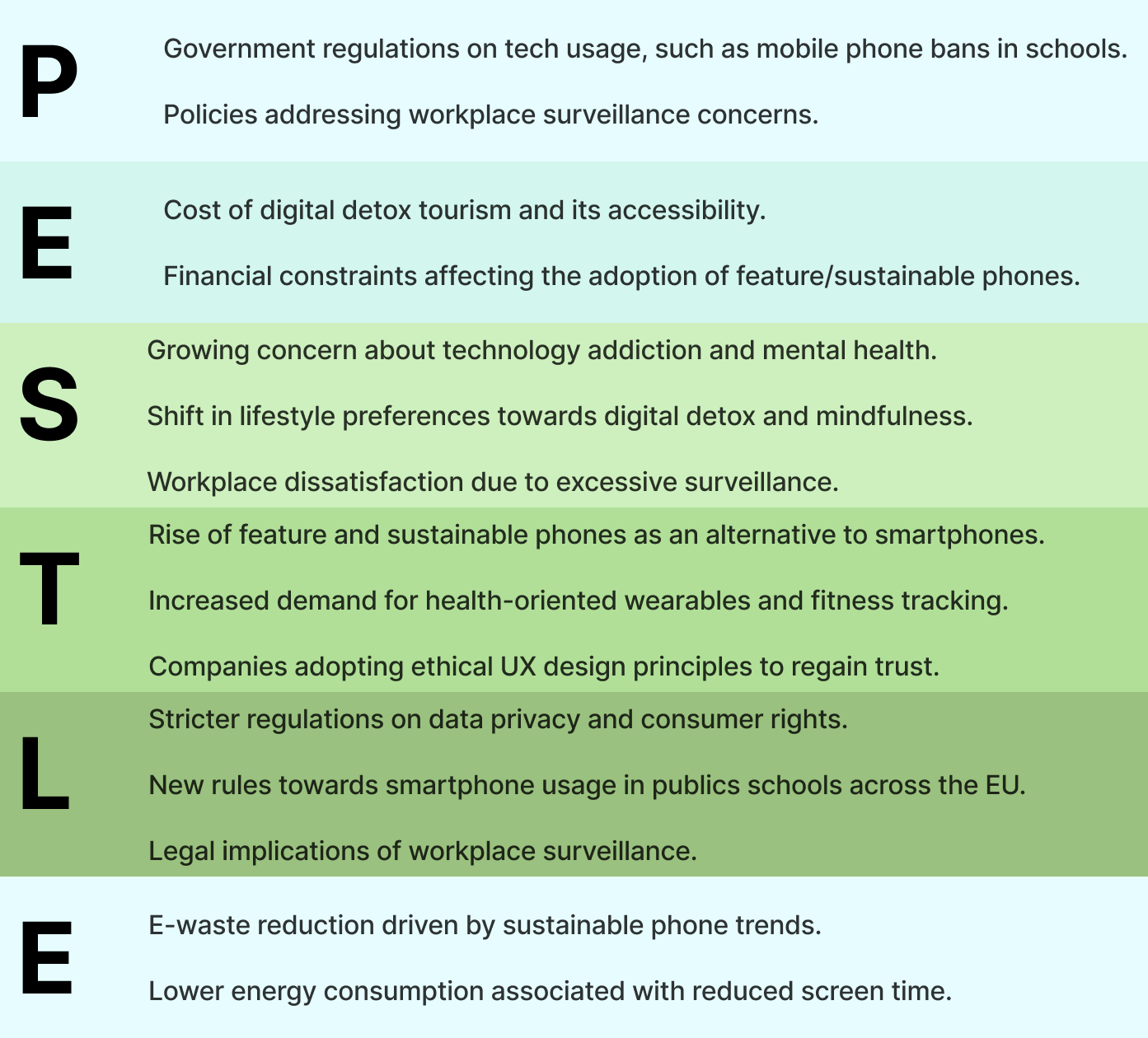
Political/Legal: Governments in the UK, France, and the Netherlands are implementing mobile phone bans in schools.
Design Opportunity: Create "School-Safe" modes that prioritize functionality over social distraction.
Social/Economic: Demand for "Digital Detox Tourism" has surged 209%, and minimalist hardware like the Light Phone is gaining market share.
Design Opportunity: Design for "Intentional Tech". Simplicity and repairability over feature bloat.
Workplace Ethics: Surveillance-heavy UX in professional spheres is leading to mistrust and stress.
Design Opportunity: Establish humane technological boundaries in enterprise software.
The Solution
A React-Based Manifesto
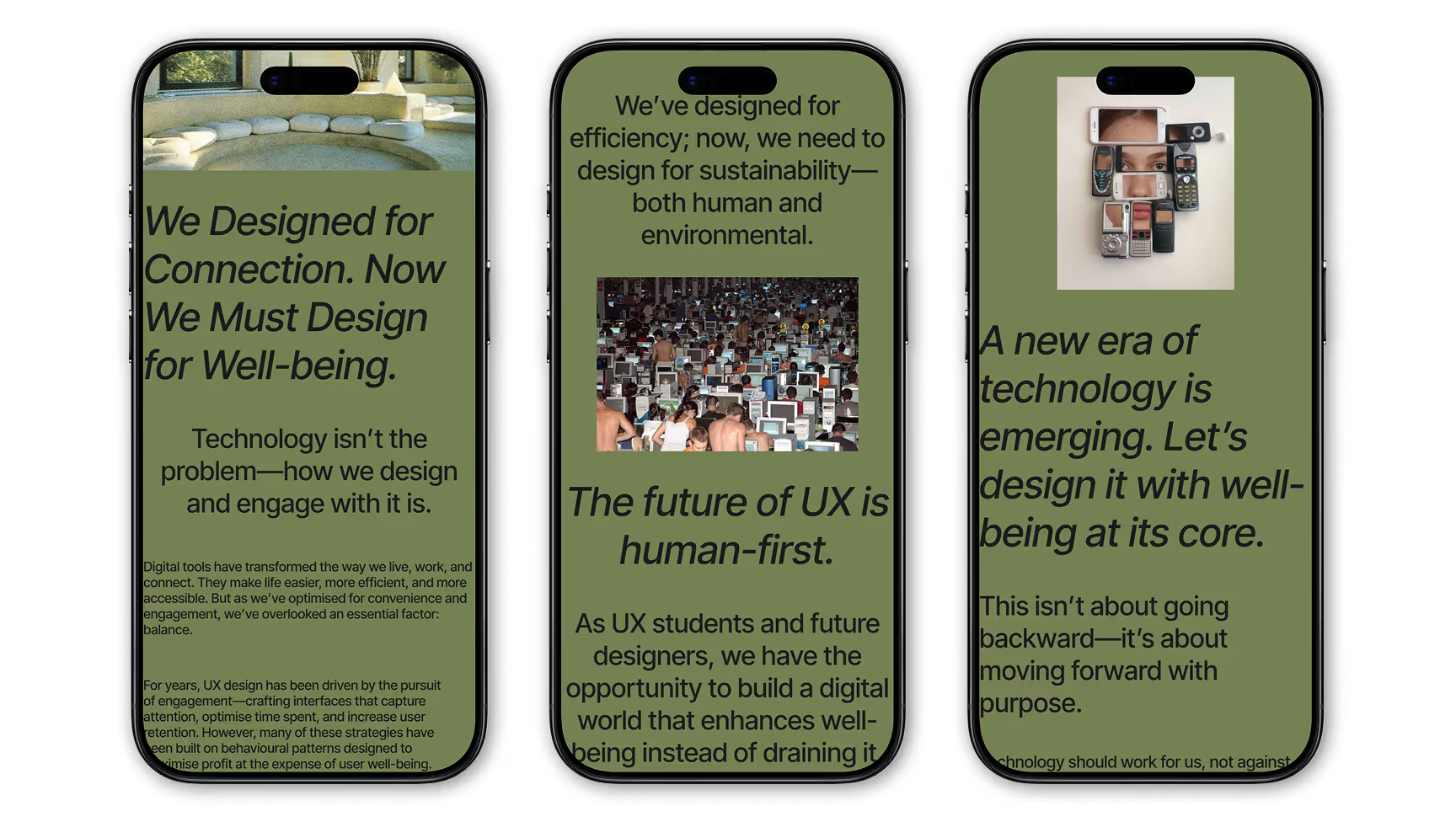
The final output is a conceptual web application built in React. It serves as an interactive framework for future UX practitioners to provoke a shift in mindset.
Core Framework Principles:
Prioritize Life Over Metrics: Shift the definition of success from 'Time-in-App' to 'Quality of Life'.
Design for Sustainability: Move from efficiency-only models to human and environmental sustainability.
Encourage Intentionality: Eliminate addictive dark patterns value simplicity and clarity.
Radical Transparency: Demand clear consent and ethical data practices in all digital environments.
Technology should work for us, not against us. This isn't about going backwards, it's about moving forward with purpose."
Conclusion
A New Design Identity
This project redefined my role from an engagement optimiser to an ethical guardian of human attention. By embedding principles of digital well-beingsuch as low-friction completion and clearer consentw can build products that respect the user’s life rather than just their data.
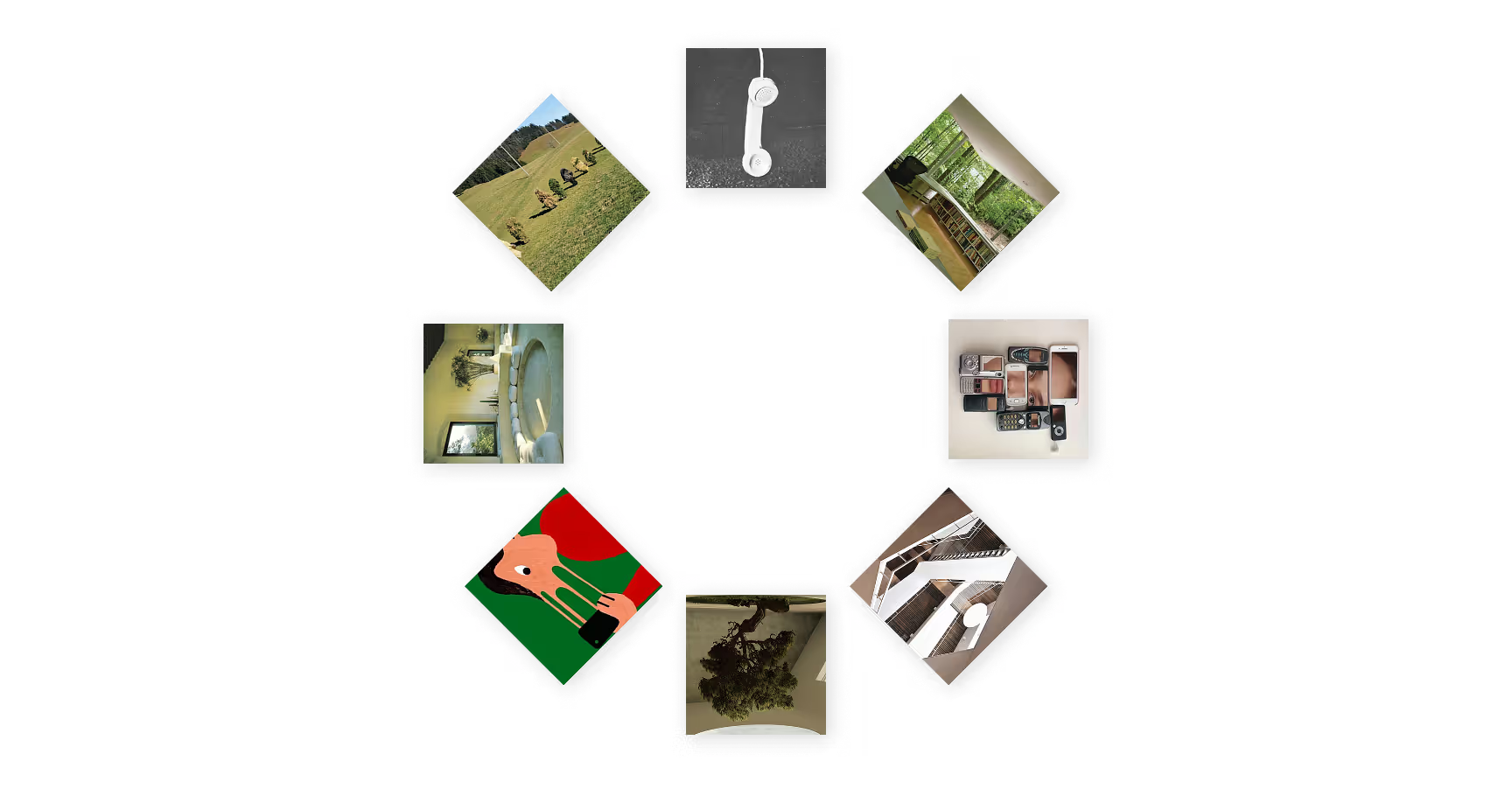
Ultimately, this research didn't change how I design, it changed why I design.